
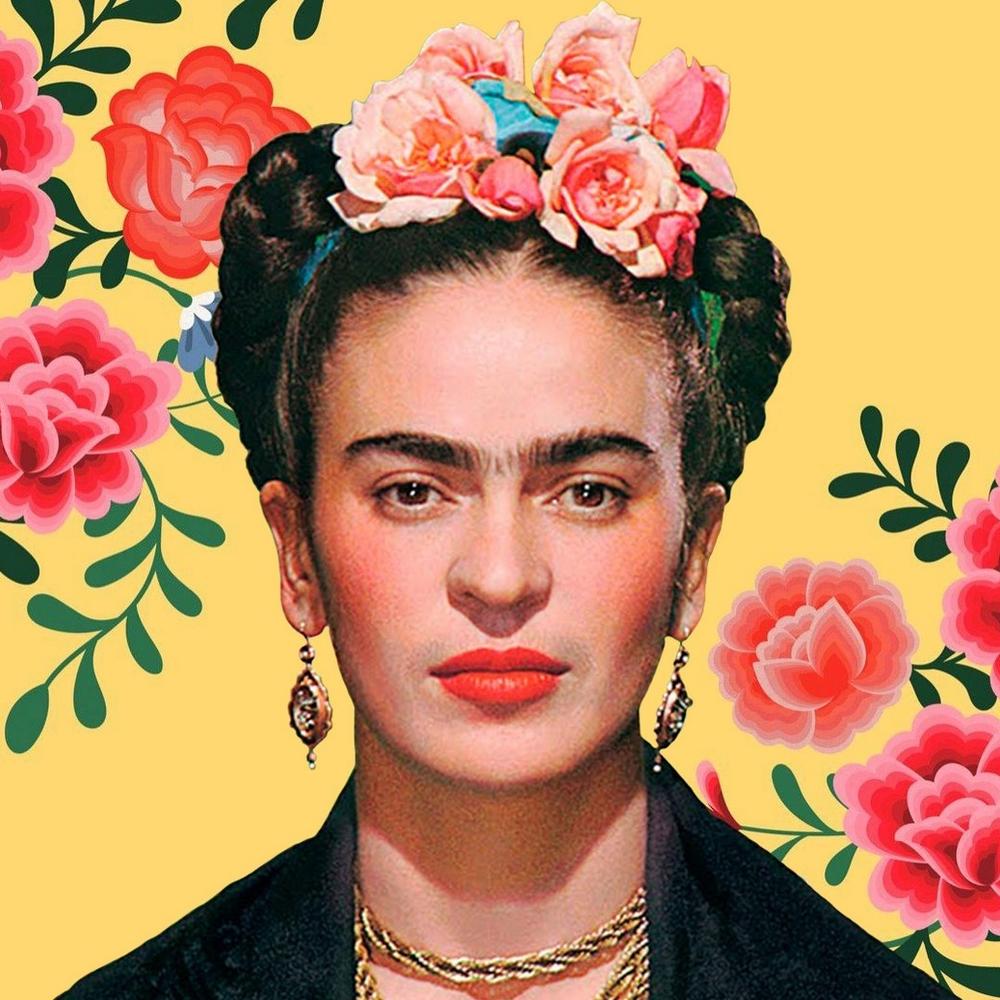
Introduction – A Soul Staring into the Mirror
In the history of painting, there are names whose brushes paint not only with color – but with blood, tears, and rebellion. Frida Kahlo – a Mexican artist, philosophical icon, feminist figure, and portrait of endurance.
Her works don’t just speak of beauty – they speak of pain, the burden of being a woman, politics, and love. She was a woman with a broken body but a free soul.
I. The Beginning of Her Life and a Dream of Medicine
Date of birth: July 6, 1907
Place of birth: Coyoacán, Mexico
Date of death: July 13, 1954
As a child, Frida contracted polio, which weakened her body but strengthened her spirit. She initially wanted to become a doctor. But at age 18, a devastating bus accident changed her entire life. Her spine, pelvis, and legs were seriously injured.
The years she spent bedridden led her to painting. Alone with a mirror, she began to recreate herself — both literally and artistically.
II. The Path to Art – Portraits of the Inner World
Frida primarily painted self-portraits. She once said:
“I paint myself because I am so often alone and because I am the subject I know best.”
Her works reflect not just her appearance, but the pain of her soul, the sorrow of the female body, and the struggle of the spirit. She developed a unique style that blended realism, symbolism, and surrealism.
III. Love, Storm, and Color – Her Relationship with Diego Rivera
Frida spent much of her life with the famous Mexican painter Diego Rivera. Their relationship was romantic, artistic, and deeply turbulent. Diego supported her art, but their personal life was full of betrayals and contradictions.
Frida depicted their relationship in many of her works, including:
-
“Diego and I”
-
“The Two Fridas”
-
“The Broken Column”
IV. Politics and a Fierce Spirit
Frida was more than a painter — she was an activist, a communist, and an independent woman. She felt a deep connection to Mexican culture, revolutionary spirit, and social justice.
Because of her political beliefs, she welcomed exiled figures like Leon Trotsky into her home. She advocated for women’s rights, freedom for the poor, and national identity.
V. The Aesthetics of Pain – Body and Soul in Art
Frida Kahlo’s art was the embodiment of physical suffering and emotional anguish. She presented herself not only as a subject but as a map of pain.
In her most famous paintings, she depicted:
-
Her body in a cast
-
A bleeding heart
-
Stitched lips
-
A life chained to a bed
She didn’t hide the pain — she transformed it into art.
VI. Her Final Years and Eternal Spirit
In her final years, Frida’s health deteriorated further. One of her legs was amputated. Still, she continued to paint, to live, and to love until the very end.
Just days before her death, she wrote:
“I joyfully await the exit – and I hope never to return.”
VII. Legacy and Symbol of Feminism
Today, Frida Kahlo stands as:
-
A symbol of female freedom and strength
-
A source of inspiration in fashion, music, and pop culture
-
An eternal figure in museums, books, and art exhibitions around the world
Her home — Casa Azul (The Blue House) — is now the Frida Kahlo Museum, visited by millions every year.
Conclusion – An Inner Cry Painted in Color
Frida Kahlo showed us through her life that even when the body breaks, the soul doesn’t fade. Her brush turned pain into beauty, silence into a scream, and woman into a heroine.
Each of her works declares:
“This is me. I am a woman. I lived. I endured. I became art.”